
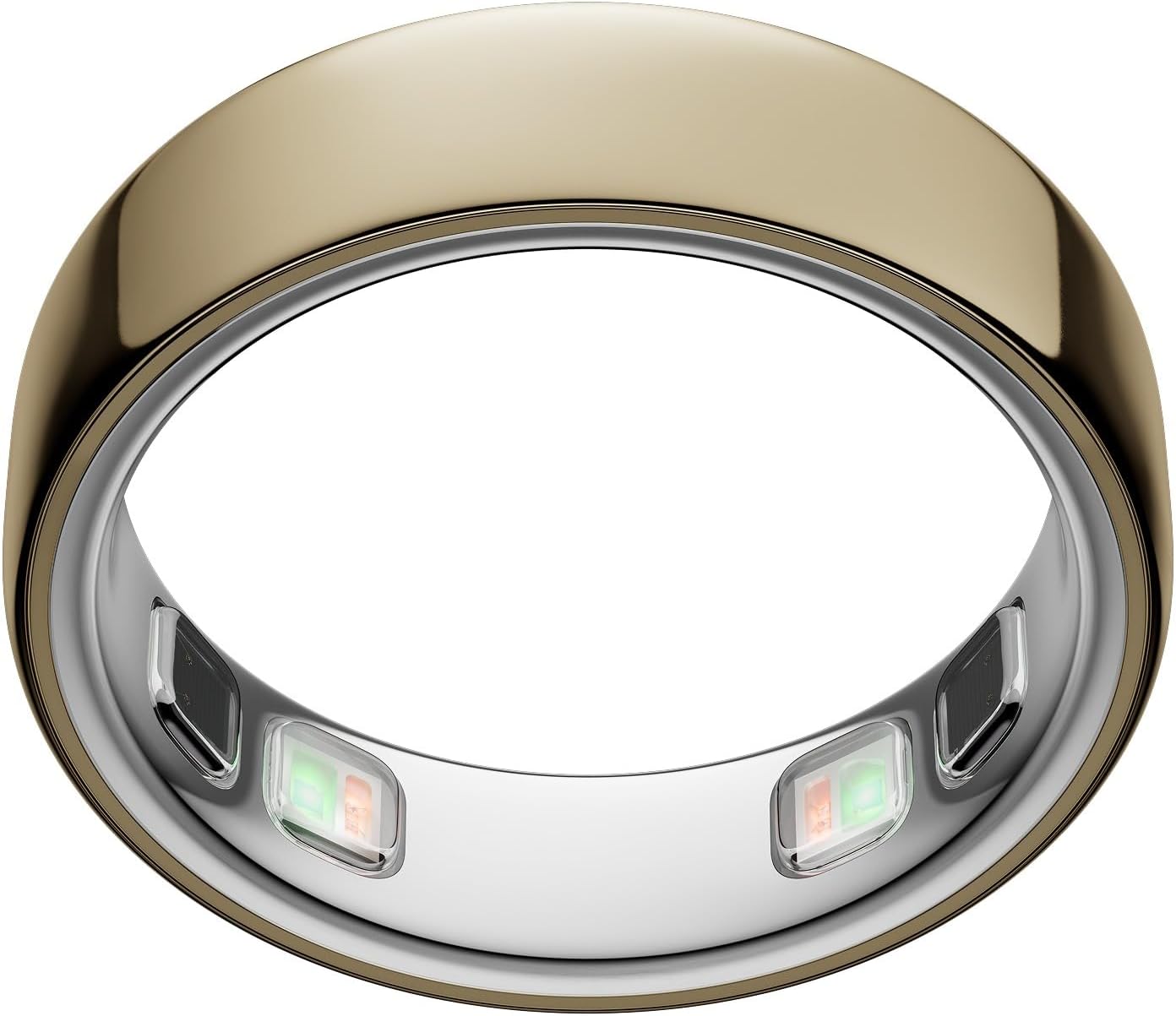
Oura Ring 4 Review: The Best Sleep Tracker You Can Wear 24/7
This post contains affiliate links. If you purchase through these links, I may earn a small commission at no extra cost to you. This helps support the site and allows me to continue creating honest reviews like this one. All opinions are my own.
I've been fascinated by smart rings ever since they started popping up as a real alternative to bulky fitness watches. The idea of tracking your sleep, heart rate, and stress levels with something that looks like a regular ring? That's the dream. And the Oura Ring 4 is the device that keeps coming up as the one to beat.
But here's the thing — at $349 before you even factor in the monthly subscription, this isn't an impulse buy. So I dug deep into what reviewers, medical researchers, and real users are saying after months of daily wear. Is it worth the investment, or are you paying a premium for a brand name?
After going through everything, I think the Oura Ring 4 earns its reputation — but it comes with some real trade-offs you need to know about before you buy.
Quick Specs
| Feature | Details |
|---|---|
| Material | Titanium (all-titanium interior, no epoxy) |
| Weight | 3.3g – 5.2g (depending on size) |
| Width | 7.90mm |
| Thickness | 2.88mm |
| Sizes | 4 – 15 (sizing kit required) |
| Finishes | Silver, Black, Brushed Silver, Stealth, Gold, Rose Gold |
| Sensors | Smart Sensing (18 signal paths), infrared PPG, red/green LEDs, NTC temperature, accelerometer |
| Battery Life | Up to 8 days (realistically 5–6 days) |
| Water Resistance | 100m (swimming, shower, sauna — no scuba) |
| Connectivity | Bluetooth (no GPS, uses phone GPS) |
| Subscription | $5.99/month or ~$70/year |
| Compatibility | iOS and Android |
| Regular Price | $349 (Silver) up to $499 (Gold/Rose Gold) |
What Makes the Oura Ring 4 Stand Out
Smart Sensing Technology
This is the biggest upgrade over the previous generation. The Ring 4 uses 18 signal pathways — more than double the 8 on the Ring 3. Why does that matter? Because a ring rotates on your finger constantly. The old model would lose contact with your skin and leave gaps in your data, especially during sleep. Smart Sensing picks the best signal source in real time, adjusting for your skin tone, BMI, physiology, and how the ring is sitting at that moment.
The result is dramatically fewer data gaps. Multiple reviewers who wore both the Ring 3 and Ring 4 confirmed that the nighttime heart rate dropouts that plagued the older model are essentially gone.
Lab-Grade Sleep Tracking
This is where the Oura Ring 4 genuinely earns its price tag. Independent studies have found that Oura's sleep staging accuracy is comparable to polysomnography — the gold-standard clinical sleep test. It tracks sleep stages (light, deep, REM), breathing patterns, heart rate variability, blood oxygen, and skin temperature throughout the night.
You get a daily Sleep Score that actually means something, plus insights into your sleep regularity, chronotype (whether you're a morning person or night owl), and circadian rhythm alignment. Over time, the app builds a personal baseline and flags when something is off — like elevated breathing rate that could signal you're getting sick before you feel symptoms.
All-Day Wellness Dashboard
Beyond sleep, the Ring 4 tracks three core scores: Readiness (how recovered you are), Activity (movement goals), and Sleep. The Vitals screen compares your daily metrics against your personal baselines. Stress tracking runs throughout the day and correlates with your activity and tags you can add — like alcohol, caffeine, or a hard workout.
The newer features include Cardiovascular Age (takes about two weeks to calibrate), stress resilience scoring, and meal timing tracking. There's also an AI advisor called Oura Advisor that analyzes your data and gives personalized recommendations, though reviewers describe it as useful but still somewhat generic.
Invisible Wearability
At 3.3 to 5.2 grams, you genuinely forget you're wearing it. There's no screen, no vibration notifications buzzing your hand, no charging every night. You put it on and it just quietly collects data in the background. For people who hate wearing a watch to bed — which is most people — this is the killer feature. The all-titanium interior is smoother than the Ring 3's resin coating, and the expanded size range (4–15, up from 6–13) means it fits more people.
The Pros
- Best-in-class sleep tracking — consistently rated the most accurate consumer sleep tracker available, backed by clinical studies
- Smart Sensing with 18 signal paths — dramatically reduces data gaps from ring rotation, a huge improvement over Gen 3
- All-titanium build — lightweight, comfortable, and durable enough for daily wear including water sports and sauna
- True set-and-forget wearability — no screen, no notifications, no nightly charging; it just works in the background
- Comprehensive wellness app — Readiness, Sleep, Activity, and Stress scores with personal baselines that improve over time
- Expanded size range (4–15) — fits significantly more hand sizes than any previous generation
- 6 finish options — Silver, Black, Brushed Silver, Stealth, Gold, and Rose Gold
- Water resistant to 100m — swim, shower, sauna, no problem
- Automatic workout detection — recognizes up to 40 activity types
- Illness early warning — elevated temperature and breathing rate deviations can flag sickness before symptoms appear
The Cons
- $5.99/month subscription is mandatory for full features — without it, you only get the three headline scores with no underlying data, insights, or trends. Over 2 years, that's $144 on top of the ring price.
- Battery life falls short of claims — Oura says 8 days, but real-world testing consistently lands at 5–6 days. Some early units had serious battery defects that cost Oura $84 million in warranty claims.
- Workout tracking is unreliable — auto-detection misidentifies activities (one reviewer had "putting a child to bed" logged as yoga), misses strength sessions, and underreads peak heart rate by 10+ bpm compared to chest straps.
- Scratches easily — the titanium finishes, especially Brushed Silver and Gold, show visible scratching within days of gym use or manual work.
- No GPS, notifications, or display — this is purely a passive health tracker. If you want to see your pace mid-run or get text alerts, you still need a watch.
- No charging case — the small magnetic puck is easy to lose, and there's no portable option for travel.
- Sizing kit required — you can't just order your ring size; Oura ships a plastic sizing kit first, adding days to the process.
- Thicker than competitors — at 2.88mm, it's noticeably bulkier than the Samsung Galaxy Ring (2.6mm) and RingConn 2 (2.0mm).
Who Should Buy This
The Oura Ring 4 is ideal if sleep quality is your top health priority. If you've tried smartwatches and hated wearing them to bed, or if you want to understand your recovery patterns without strapping on a chest monitor, this is the best passive tracker on the market. The data depth is genuinely useful — not just vanity metrics, but actionable insights that can change your sleep habits.
It's also a great fit if you want health awareness without the constant screen distraction. There are no notifications pulling your attention. You check the app when you want to, on your terms. For business owners and high-performers who want to optimize recovery and manage stress, the Readiness and Stress scores provide real value.
Who Should Look Elsewhere
If you're a serious athlete who needs accurate real-time workout data — heart rate zones, GPS pace, stride cadence — the Oura Ring 4 will frustrate you. Its workout tracking is its weakest feature by far. Get a Garmin or Apple Watch for that.
If the subscription model bothers you philosophically, the Samsung Galaxy Ring ($399, no subscription) gives you similar hardware with Samsung Health integration and no ongoing fees, though its health insights aren't as deep. The Ultrahuman Ring Air also skips the subscription.
And if you work with your hands — construction, gym lifting, mechanical work — a smart ring of any brand is going to get scratched and potentially damaged. A watch on your wrist is better protected.
The Competition
| Smart Ring | Price | Subscription | Battery | Thickness | Weight (min) | Sleep Accuracy |
|---|---|---|---|---|---|---|
| Oura Ring 4 | $349+ | $5.99/mo | 5–6 days | 2.88mm | 3.3g | Best in class |
| Samsung Galaxy Ring | $399 | None | ~7 days | 2.6mm | 2.3g | Good |
| Ultrahuman Ring Air | $349 | None | ~6 days | 2.2mm | 2.4g | Good |
| RingConn 2 | ~$259 | None | ~7 days | 2.0mm | 2.0g | Decent |
On pure health data depth and sleep accuracy, Oura wins. On value (no subscription), hardware thinness, and workout tracking, the competitors are gaining ground fast.
The Verdict
The Oura Ring 4 is the best sleep and wellness tracker you can buy in a ring form factor — and arguably in any form factor. The Smart Sensing upgrade genuinely solves the data gap problem that held the Ring 3 back, and the sleep tracking accuracy is backed by real clinical research, not just marketing claims.
But you need to go in with clear expectations. This is a wellness and recovery tool, not a fitness tracker. The workout detection is mediocre, the battery doesn't hit 8 days, the subscription adds up, and early batches had real quality control issues. At $349 plus $72 a year, you're paying a premium for the best sleep data in the game — and that's exactly what you're getting.
If optimizing your sleep, recovery, and stress management is worth that investment to you, the Oura Ring 4 delivers. Just don't expect it to replace your workout watch.
Rating: 4/5 — Best-in-class sleep and wellness tracking in an invisible form factor, held back by a mandatory subscription, mediocre workout features, and battery life that doesn't match the marketing.
Deal Tip 💡
The Oura Ring 4 regularly drops during Amazon sales events — it hit $199 during Prime Day, a massive $150 off the $349 Silver. If you're not in a rush, set a price alert and wait for the next major sale. And start with the Silver finish — it's the cheapest option and just as functional as the Gold or Rose Gold at $499.
The Verdict
The gold standard in smart ring health tracking — lab-grade sleep accuracy, 8-day battery life, and an all-titanium build that disappears on your finger. Just know the $5.99/month subscription is the real price of entry. Worth buying if it fits how you'll actually use it.
This post contains affiliate links. If you buy through one, I may earn a commission at no extra cost to you.