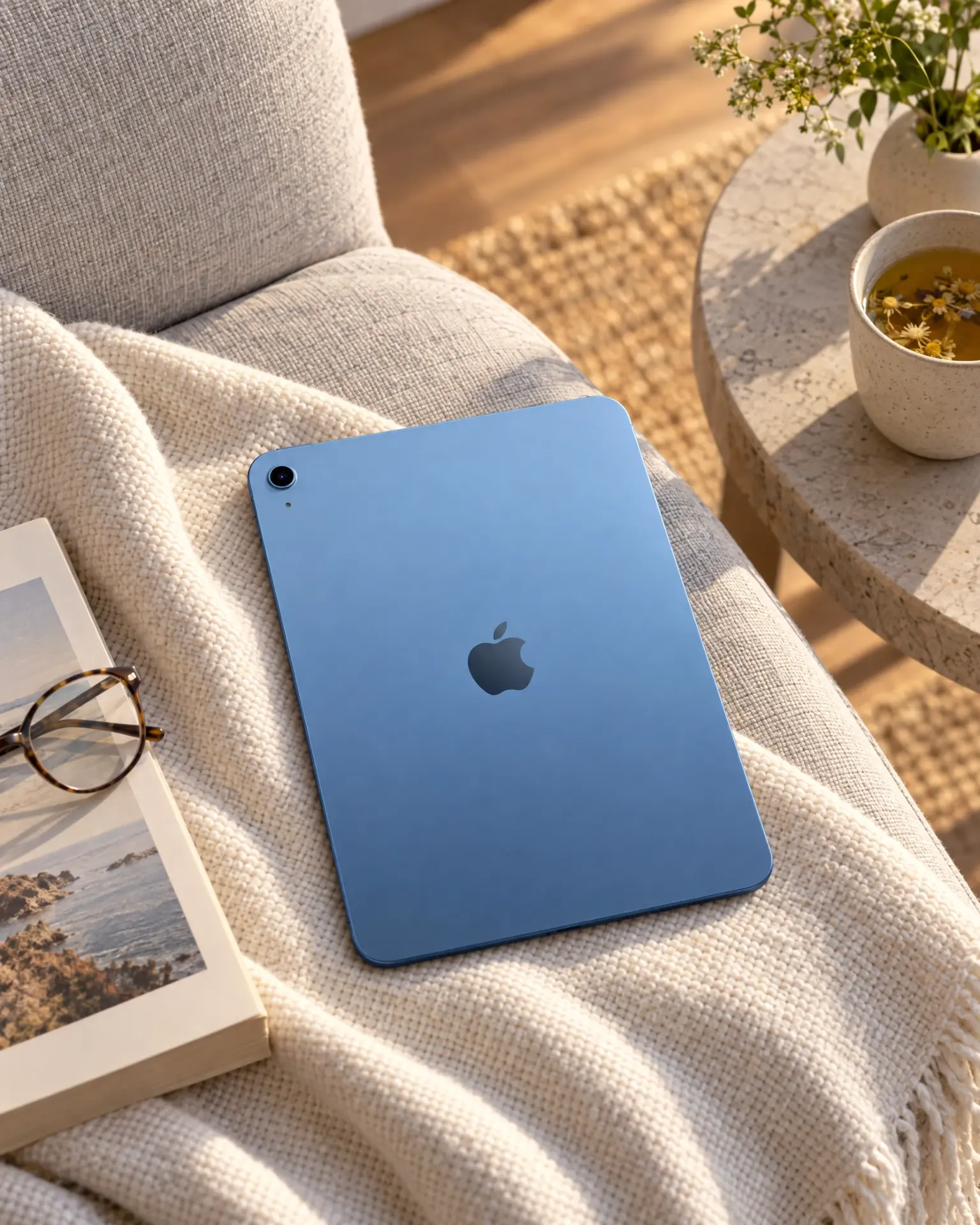
The Only Tablet Recommendation You Need
Every tech reviewer on the internet agrees on almost nothing. They argue about phones, laptops, headphones, and TVs endlessly. But ask any of them "which tablet should most people buy?" and the answer is the same across the board: the base iPad. Tom's Guide gave it an Editor's Choice. Expert Reviews called it the best tablet money can buy. TechRadar, Engadget, Laptop Mag — same story. The iPad 11-inch with the A16 chip is the default answer because it does everything most people need a tablet to do, and it does it for $299-349.
I'm going to tell you exactly what this iPad does well, what it doesn't do, and whether the more expensive iPad Air or iPad Pro is worth the extra money. Spoiler: for 80% of people, it's not.
The Specs
| Spec | Detail |
|---|---|
| Chip | Apple A16 Bionic (5-core CPU, 4-core GPU) |
| Display | 11-inch Liquid Retina, 2360x1640, 264 ppi |
| Brightness | 500 nits |
| Storage | 128GB / 256GB / 512GB |
| Front Camera | 12MP with Center Stage |
| Back Camera | 12MP Wide with True Tone flash |
| Biometrics | Touch ID (top button) |
| Connectivity | Wi-Fi 6, Bluetooth 5.2 |
| Port | USB-C |
| Battery | Up to 10 hours (tested at 11:25 by Laptop Mag) |
| Weight | 1.05 lbs |
| Colors | Silver, Blue, Pink, Yellow |
| Price | $349 (128GB), frequently $271-299 on Amazon |
Why This iPad Is the One to Buy
The A16 chip is still fast in 2026. This is the same processor that powered the iPhone 14 Pro and iPhone 15 — not exactly ancient technology. It handles split-screen multitasking, 4K video playback, photo editing, gaming, and dozens of open browser tabs without breaking a sweat. Is it as fast as the M3 in the iPad Air or the M4 in the iPad Pro? No. Will you notice the difference scrolling through email and watching Netflix? Not even slightly. For everyday use, the A16 has more power than most people will ever tap into.
128GB of base storage is finally enough. Previous base iPads started at 64GB, which filled up embarrassingly fast. Apple doubling the base storage to 128GB is the single most practical upgrade in this generation. That's enough for thousands of photos, hundreds of apps, a decent music library, and a handful of downloaded movies. Most people won't need to think about storage management at all.
The 11-inch display is sharp and bright. At 2360x1640 resolution and 500 nits of brightness, text is crisp, colors are vivid, and the screen is bright enough to use comfortably in a well-lit room. True Tone adjusts the white balance to match your ambient lighting, which reduces eye strain during long reading or browsing sessions. For watching movies, reading, browsing, gaming, and FaceTime calls, this display delivers.
At 1.05 pounds, you barely notice you're holding it. This is where tablets win over laptops for casual use. Lying on the couch, sitting in bed, reading on a plane — holding a one-pound iPad feels natural in a way that a three-pound laptop never does. The thin 0.28-inch profile means it slides into any bag or backpack without adding bulk.
The cameras are genuinely useful. The 12MP front camera with Center Stage is great for video calls — it automatically pans and zooms to keep you centered in the frame, even if you're moving around or cooking while on a FaceTime call. The 12MP rear camera with True Tone flash handles document scanning, quick photos, and 4K video recording. Is it replacing your iPhone camera? No. But for tablet-appropriate camera use, it's more than sufficient.
USB-C means one cable for everything. Charge the iPad, connect to external displays, plug in USB drives, hook up headphones — all through the same USB-C port that your MacBook, Android phone, and most modern devices use. No more hunting for a Lightning cable.
Touch ID is fast and reliable. The fingerprint sensor is built into the top button. One press to unlock, one press to approve Apple Pay purchases, one press to confirm App Store downloads. It's not Face ID, but it works consistently and quickly.
iPadOS makes this more than a big phone. This is the real reason to buy an iPad over an Android tablet. iPadOS supports true split-screen multitasking, drag-and-drop between apps, a full desktop-class Safari browser, Apple Pencil support for handwriting and drawing, and access to over a million tablet-optimized apps. Android tablets have gotten better, but iPadOS is still the best tablet operating system by a significant margin.
What This iPad Doesn't Do
No Apple Intelligence. The A16 chip doesn't support Apple Intelligence — Apple's AI features that include writing tools, image generation, smart summaries, and Siri upgrades. If Apple Intelligence is important to you, you need at least the iPad mini 7 (A17 Pro) or iPad Air (M3). For most people today, Apple Intelligence is a nice-to-have, not a must-have. But this gap will grow over the coming years as more features become AI-dependent.
The display is 60Hz. In 2026, most flagship phones and many competing tablets run at 120Hz, which makes scrolling and animations noticeably smoother. The iPad's 60Hz display is perfectly fine — you won't notice it unless you're coming directly from a 120Hz device. But if butter-smooth scrolling matters to you, the iPad Pro with ProMotion is the upgrade.
No anti-reflective coating. The iPad Air has an ultralow reflectivity coating that reduces glare. The base iPad doesn't. If you use your tablet outdoors or in rooms with bright windows behind you, you'll see more reflections on the screen. A matte screen protector ($10-15) solves this if it bothers you.
sRGB color only — no P3 wide color. The iPad Air and Pro support the wider DCI-P3 color gamut, which means more vibrant, accurate colors. For casual use, the difference is subtle. For digital artists, photographers, and designers, the wider color gamut on the Air or Pro is worth the upgrade.
Slow charging. With the included 20W charger, the iPad charges at a leisurely pace — Laptop Mag measured only 24% battery after 30 minutes of charging. Plan on 2-3 hours for a full charge. Not a dealbreaker, but overnight charging is the move.
Accessories cost extra. The Magic Keyboard Folio ($249) and Apple Pencil USB-C ($79) are sold separately. If you need both, you're adding $328 to the cost of the iPad — nearly doubling the total investment. Consider whether you actually need these accessories before adding them to the cart.
Doesn't support Apple Pencil Pro. The newest Apple Pencil Pro (with squeeze gestures, barrel roll, and haptic feedback) only works with the iPad Air and Pro. The base iPad supports the Apple Pencil (USB-C) and the 1st generation Apple Pencil. For basic note-taking and drawing, the USB-C Pencil is perfectly adequate. For professional illustration work, the Pencil Pro on an iPad Air or Pro is the better setup.
iPad (A16) vs. iPad Air (M3) vs. iPad Pro (M4) — Which One?
iPad A16 ($349): The right choice for 80% of people. Web browsing, streaming, email, social media, light gaming, video calls, note-taking, reading, and casual creative work. If any of those describe your primary use case, stop here.
iPad Air M3 ($599-749): Worth the upgrade if you want Apple Intelligence, P3 wide color for creative work, an anti-reflective display, or the M3 chip for more demanding apps like video editing or complex multitasking. Also comes in a 13-inch size for people who want a bigger screen.
iPad Pro M4/M5 ($999+): Only for power users who need the best display (OLED), the fastest chip, Face ID, ProMotion 120Hz, and Thunderbolt connectivity. Overkill for most people.
Amazon Fire Tablet ($99-149): If your budget is truly tight and you only need basic streaming and browsing, a Fire tablet works. But the app ecosystem, display quality, and overall experience are dramatically inferior to even the base iPad. If you can stretch to $299, the iPad is worth every extra dollar.
Who Should Buy This
Parents buying a tablet for the family. The iPad handles homework, FaceTime with grandparents, YouTube, games, and reading — all in a durable, lightweight package. Add a protective case and it'll survive years of family use.
Students. Note-taking with the Apple Pencil, research in Safari, textbooks in the Kindle app, Zoom lectures, and study apps. The iPad replaces a stack of notebooks and textbooks in a one-pound package.
Anyone who wants a couch/bed/travel screen. If your primary tablet use is streaming, browsing, reading, and casual gaming while relaxed, the base iPad is perfect. You don't need M-series power to watch Netflix.
Small business owners. Point-of-sale systems, inventory management, client presentations, document signing, video calls with clients — the iPad handles all of it at a fraction of the cost of a laptop.
First-time tablet buyers. If you've never owned a tablet and want to see if it fits your life, the base iPad is the lowest-risk way to find out. If you love it, you'll know what to upgrade to later. If you don't, you're only out $299, not $999.
The Verdict
The Apple iPad 11-inch (A16) is the tablet I recommend to everyone who asks — and it's not even close. It delivers 90% of the iPad experience at 35% of the iPad Pro price. The A16 chip is more than fast enough, 128GB of base storage eliminates the biggest complaint about previous models, and iPadOS is still the best tablet operating system available.
Yes, the display is 60Hz. Yes, it lacks Apple Intelligence. Yes, the charger is slow. But none of those shortcomings matter enough to justify spending $250-650 more on an iPad Air or Pro for most people's use cases. Save that money, buy the base iPad, and use the difference on a good case and a year of Apple TV+.
At $349 retail — and frequently available for $271-299 on Amazon — this is the best value in tablets, period.
Deal tip: The iPad A16 has dropped as low as $271 on Amazon. The sweet spot is $280-299 — if you see it at that price, buy it. The deepest discounts happen during Prime Day (July), Black Friday, and holiday sales. The Blue and Pink colors tend to sell out first during big sales events.
The Verdict
The Apple iPad 11-inch (A16) is the tablet I recommend to everyone who asks — and it's not even close. It delivers 90% of the iPad experience at 35% of the iPad Pro price. The A16 chip is more than fast enough, 128GB of base storage eliminates the biggest complaint about previous models, and iPadOS is still the best tablet operating system available. At $349 retail — and frequently available for $271-299 on Amazon — this is the best value in tablets, period.
This post contains affiliate links. If you buy through one, I may earn a commission at no extra cost to you.